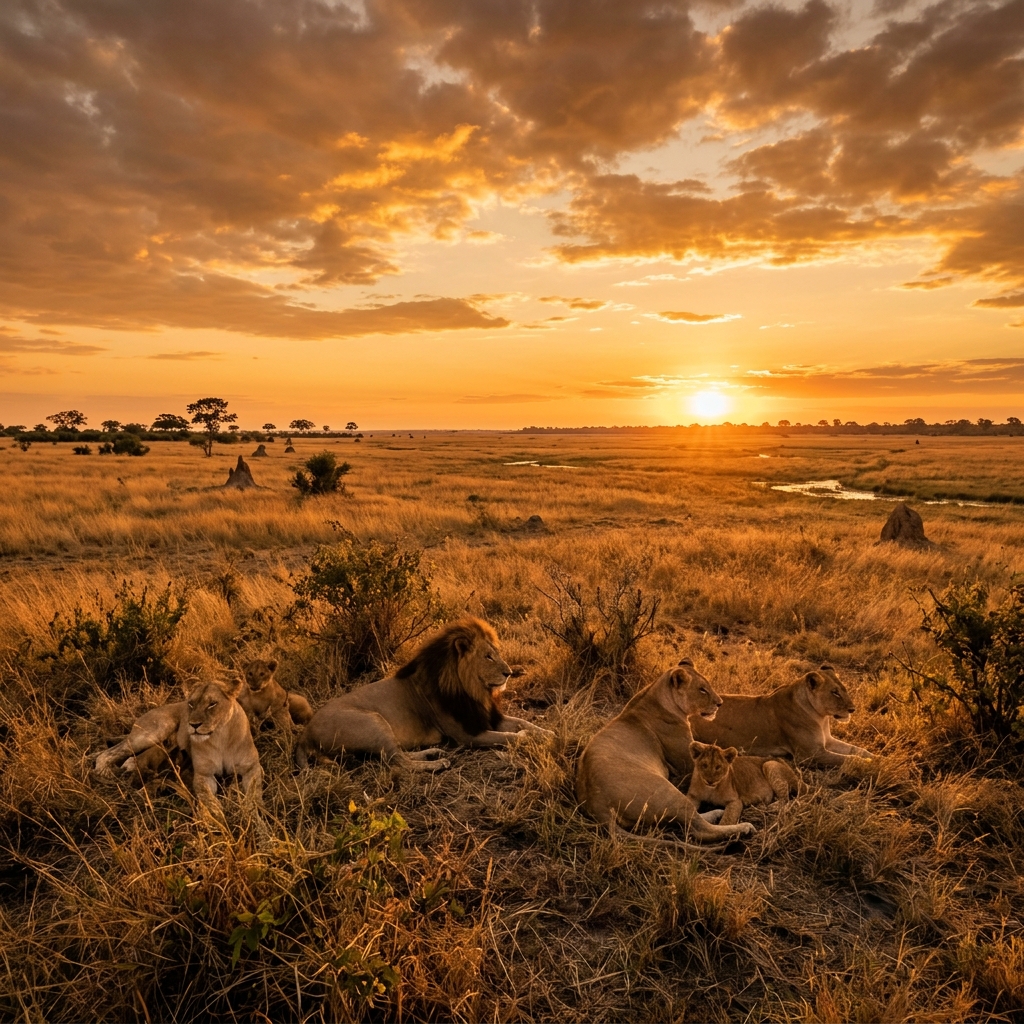
What if we could build a new safari travel economy in Africa, with indigenous communities at its heart?
How do we practically include Africa’s indigenous communities in the multi-billion-dollar safari travel industry from which they have been largely excluded for so long?
There are arguably two approaches:
- Option 1: Introduce mechanisms that give communities equity, ownership and revenue-sharing opportunities within the existing safari travel supply chain.
- Option 2: Create an entirely new, complementary community-led travel sector, where communities benefit from ownership and equity from day one.
The existing safari industry has been built over decades and supports a fragile but critically important ecosystem centred around Africa’s national parks and protected areas. Disrupting this established industry through enforced restructuring could create unnecessary conflict, undermine investor confidence and potentially damage the very conservation economy we are trying to strengthen.
But what if, instead, we created a much bigger travel economy alongside it?
A new travel economy with communities at its heart, where the rules of engagement are clearly established and communities, government, conservation organisations and the private sector work together to develop an entirely new portfolio of tourism destinations.
Destinations where communities are not simply participants or beneficiaries, but owners, custodians and active partners in their own economic development.
This is the opportunity behind the Rewilding Africa CIC National Park Conservancy Model
“We aren’t asking the existing safari industry to give up its share of the pie. We’re creating a new pie, with communities as its principal owners and beneficiaries.”
Our ambition is to establish a network of community-led National Park Conservancy destination brands across Africa, surrounding and complementing existing national parks.
By developing new destinations, experiences, tourism enterprises and investment opportunities, we can attract additional domestic and international visitors, create employment, stimulate local enterprise and establish sustainable economic incentives for conservation.
Importantly, this is not about replacing or interfering with existing national park management or the established safari industry. It is about building a complementary economic ecosystem that strengthens both.
To help bring this vision to life, we have established African Conservancies, a specialist destination development, consulting and travel service proudly offered by Rewilding Africa CIC.
There is an opportunity to build something extraordinary here. A new generation of African travel destinations, where conservation, tourism and community prosperity work together.